Assessment
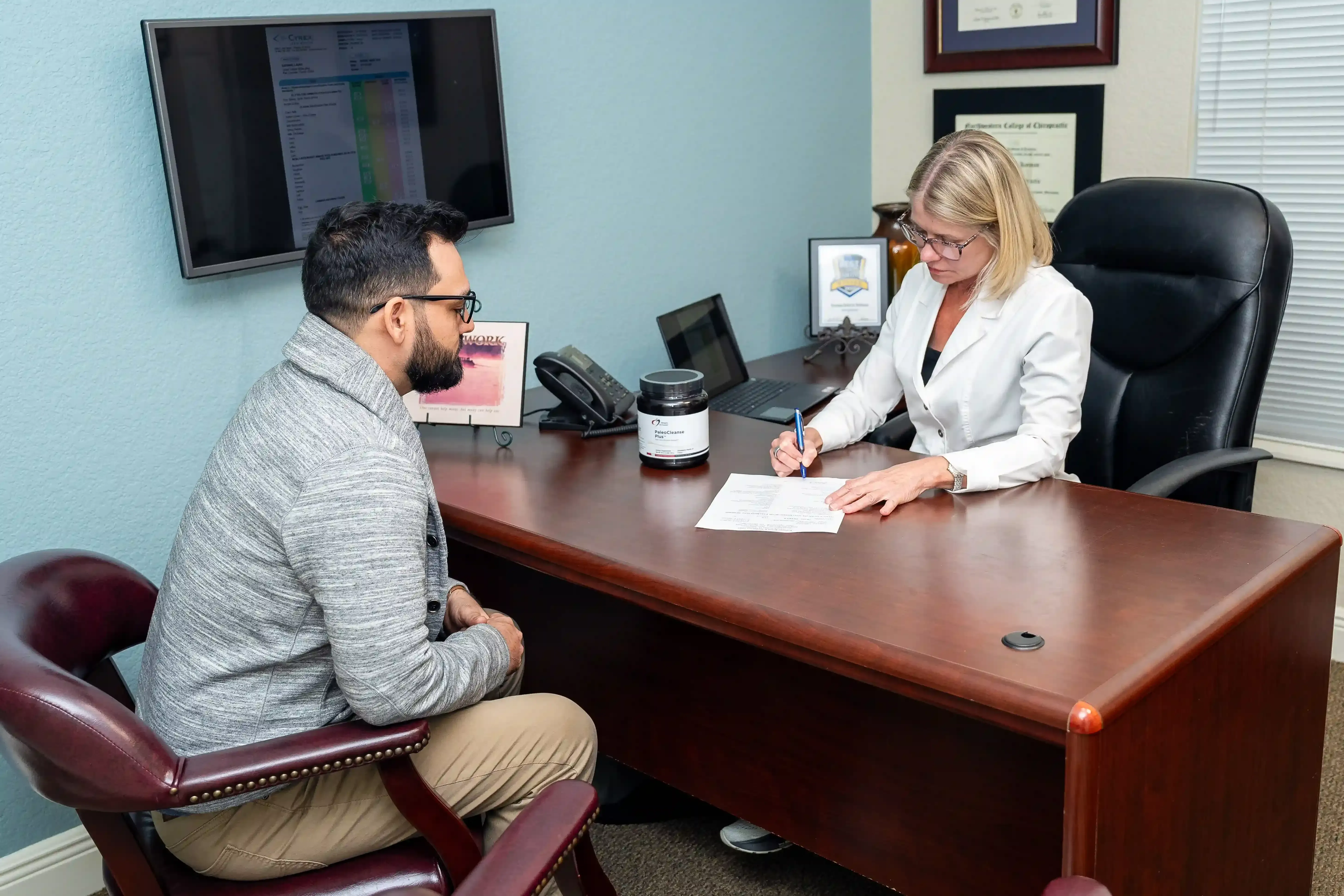
Dr. Korman or Dr. Kauffman evaluates your jaw mechanics, cervical alignment, and muscle tension using palpation and range-of-motion testing.


Non-surgical chiropractic approach addressing temporomandibular joint dysfunction for lasting jaw pain relief.

Understanding Jaw Joint Disorders
TMJ dysfunction makes everyday activities painful and unpredictable. You may wake with a sore, stiff jaw from clenching during sleep, struggle to open your mouth wide enough to eat, or experience sharp pain radiating into your ear, temple, or neck. Many patients report persistent headaches and migraines that they never connected to their jaw. The clicking, popping, and grinding sounds can be alarming, and the constant discomfort often disrupts concentration, sleep, and social activities.
Chiropractic TMJ treatment corrects the structural and neuromuscular imbalances driving your symptoms. Our staff uses upper cervical adjustments, soft tissue techniques, and therapeutic exercises to restore proper jaw mechanics. By addressing the cervical spine connection to TMJ function, treatment relieves pain at the source rather than masking it. Most patients notice reduced clicking and improved jaw mobility within the first few sessions, with progressive improvement over a full course of care.

The Science of Jaw Joint Restoration
TMJ pain treatment is a conservative, non-surgical approach to temporomandibular joint disorders (TMD). The temporomandibular joint is a complex hinge-and-slide mechanism connecting your jawbone to your skull, responsible for chewing, speaking, and yawning. When this joint becomes misaligned or surrounding muscles develop dysfunction, the result is chronic pain, restricted movement, and radiating symptoms throughout the head and neck.
Chiropractic TMJ treatment targets the biomechanical relationship between the cervical spine and jaw joint. Research demonstrates that cervical dysfunction, particularly at the C0-C3 vertebral levels, directly influences TMJ function through the trigeminocervical nucleus, a shared nerve pathway processing pain signals from both the neck and jaw. A retrospective case series of 14 TMD patients treated with chiropractic Activator protocols showed an average pain reduction of 80.9 percent, from 8.3 to 1.4 on a numeric pain scale.
In addition to manual corrections, treatment may include advanced soft tissue and neuromuscular therapies designed to address muscle imbalance and overactivity in the jaw. One of these complementary modalities is Emface, a non-invasive technology that uses synchronized radiofrequency and high-intensity facial electrical stimulation (HIFES) to help rebalance facial and jaw muscles. By improving muscle coordination and reducing excessive tension, Emface supports more stable TMJ function and enhances overall treatment outcomes.
Unlike injectables that temporarily reduce muscle activity, Emface works by improving underlying muscle performance, helping both overactive and underactive muscles function more efficiently together.
Our staff evaluates your jaw mechanics, cervical alignment, and muscle function using palpation and range-of-motion testing. Treatment includes gentle upper cervical adjustments, myofascial release of the pterygoid and masseter muscles, targeted home exercises, and when appropriate, Emface to support muscle re-education and reduce jaw tension. Most patients notice improved jaw mobility within the first few sessions.
Initial improvement in jaw pain and clicking typically begins within two to four weeks of consistent care. Full stabilization of the joint develops over six to 12 weeks as structural corrections hold and muscle balance is restored.

Root-Cause Relief Without Surgery

Gentle manual techniques that avoid surgery, injections, or pharmaceutical dependency
Treats the cervical spine and jaw together for comprehensive structural correction
Reduces dependence on muscle relaxants and pain medications with lasting results
Restores comfortable eating, speaking, yawning, and sleeping without jaw restrictions
Corrective approach prevents symptom recurrence rather than temporarily masking pain
Incorporates Emface to improve muscle balance, reduce tension, and enhance treatment outcomes without injections or downtime
Compare Your Options
| Treatment | Mechanism | Time | Results | Duration | Downtime | Best For |
|---|---|---|---|---|---|---|
| Chiropractic TMJ Treatment | Spinal and jaw alignment | 30-45 min/session | 2-4 weeks | Long-term with maintenance | None | Structural jaw dysfunction |
| Oral Splints | Jaw repositioning guard | Worn nightly | 4-8 weeks | While worn | None | Nighttime clenching |
| Botox Injections | Muscle relaxation | 15-20 minutes | 1-2 weeks | 3-4 months | Minimal | Muscle-driven TMJ pain |
| TMJ Surgery | Joint reconstruction | 1-3 hours | 6-12 weeks | Permanent | 4-6 weeks | Severe structural damage |
| Emface | RF + HIFES muscle stimulation | 20-30 min | 2-4 weeks | Several months | None | Muscle imbalance, clenching, non-invasive TMJ relief |

Finding Your Path to Jaw Relief
Chiropractic TMJ treatment benefits patients experiencing temporomandibular joint dysfunction, whether from recent onset jaw pain or long-standing chronic TMD. Many patients also find relief from associated migraines and headaches linked to jaw tension and cervical misalignment.
If you are unsure whether chiropractic TMJ treatment is appropriate for your situation, our staff provides a thorough evaluation to determine the best approach. Absolute contraindications are rare, and most patients with jaw pain are excellent candidates for conservative care.
Dr. Korman or Dr. Kauffman evaluates your jaw mechanics, cervical alignment, and muscle tension using palpation and range-of-motion testing.
Using precise upper cervical techniques, Dr. Korman or Dr. Kauffman corrects spinal misalignment at C0-C3 that influences jaw joint function.
Gentle manual therapy restores proper TMJ movement, releases myofascial trigger points, and reduces muscle guarding.
You receive targeted jaw exercises, posture guidance, and stress management techniques to support healing between visits.

What to Know
Mild jaw and neck soreness is the most common side effect, typically resolving within 24 to 48 hours after treatment. Some patients notice temporary changes in their bite pattern as the joint repositions to its proper alignment. These responses are normal and diminish with subsequent visits as your jaw adapts to corrective care.
Serious complications from chiropractic TMJ treatment are uncommon. Temporary increased jaw clicking may occur during early treatment as joint mechanics shift. Symptom aggravation occurs in fewer than five percent of cases and typically resolves with treatment plan modification. If discomfort persists beyond 48 hours, contact our office for guidance.
Chiropractic TMJ treatment is widely recognized as a safe, conservative first-line approach. The American Dental Association recommends conservative, reversible therapies before considering surgical intervention for temporomandibular disorders. Our staff's advanced training in functional neurology and upper cervical techniques minimizes risk through precise, targeted adjustments.
TMJ chiropractic treatment at Arise Integrative Wellness in Port Charlotte, FL is tailored to your individual condition, symptoms, and overall treatment goals. The number of sessions required and the techniques used will vary depending on the severity of your TMJ dysfunction and how your body responds to care. Most patients benefit from a structured series of visits, though the exact treatment plan is determined on a case-by-case basis.
During your consultation, our provider will evaluate your condition and create a personalized treatment plan designed specifically for you. All recommendations will be reviewed in detail so you can make informed decisions about your care.
We are primarily a cash-based office because we want your care to be determined by your needs—not by an insurance company’s limitations. Many insurance plans place strict caps on the number of visits, require specific treatment protocols, or deny certain therapies altogether, regardless of what’s clinically appropriate.
By not participating with most insurance plans, we’re able to customize your treatment plan based on what will actually help you get better, not what’s pre-approved. It also allows us to spend more time with you, use a wider range of techniques, and focus on long-term results rather than short-term, restricted care. However we are more than happy to print out proper documentation so you can submit your treatments to your insurance company for reimbursement. Evaluations related to auto accidents or workplace injuries may be covered under personal injury protection (PIP) or workers' compensation policies.
We work with patients to make TMJ treatment accessible regardless of insurance status. Ask about our payment plans and self-pay options during your consultation at Arise Integrative Wellness.
Port Charlotte's Trusted Provider
Functional neurology certification with upper cervical specialization for TMJ care
Addresses spinal, muscular, and nutritional factors contributing to jaw dysfunction
Two chiropractors with decades of combined clinical experience in Southwest Florida
Comprehensive jaw and cervical evaluation with customized treatment protocols
Discover treatments that work alongside TMJ therapy for total relief.

Mental wellness therapies and educational workshops for lasting vitality
Your Questions Answered
Most patients require six to 12 visits over several weeks. Dr. Korman or Dr. Kauffman creates a personalized care plan during your initial evaluation based on the severity and duration of your TMJ dysfunction.
The techniques are gentle and most patients find treatment comfortable. Upper cervical adjustments and myofascial release use controlled, precise pressure rather than forceful manipulation.
Yes, many TMJ patients benefit from combining care with upper cervical chiropractic adjustments for comprehensive cervical-jaw correction. Dr. Korman or Dr. Kauffman may also recommend nutritional support if inflammation contributes to your symptoms.
TMJ dysfunction can result from jaw injury, teeth grinding or clenching, cervical spine misalignment, arthritis, stress-related muscle tension, or poor posture. Often multiple factors contribute simultaneously.
With a full course of corrective care and consistent home exercises, many patients experience lasting relief. Periodic maintenance visits may be recommended to preserve alignment and prevent recurrence.
Yes, TMJ dysfunction is a well-documented trigger for chronic headaches and migraines. The shared nerve pathways between the jaw and upper cervical spine mean jaw misalignment can directly cause head pain.
Yes. Emface helps improve muscle balance and reduce overactivity in the jaw, which can significantly decrease TMJ pain, clenching, and tension. It is especially effective when combined with chiropractic care for long-term results.
