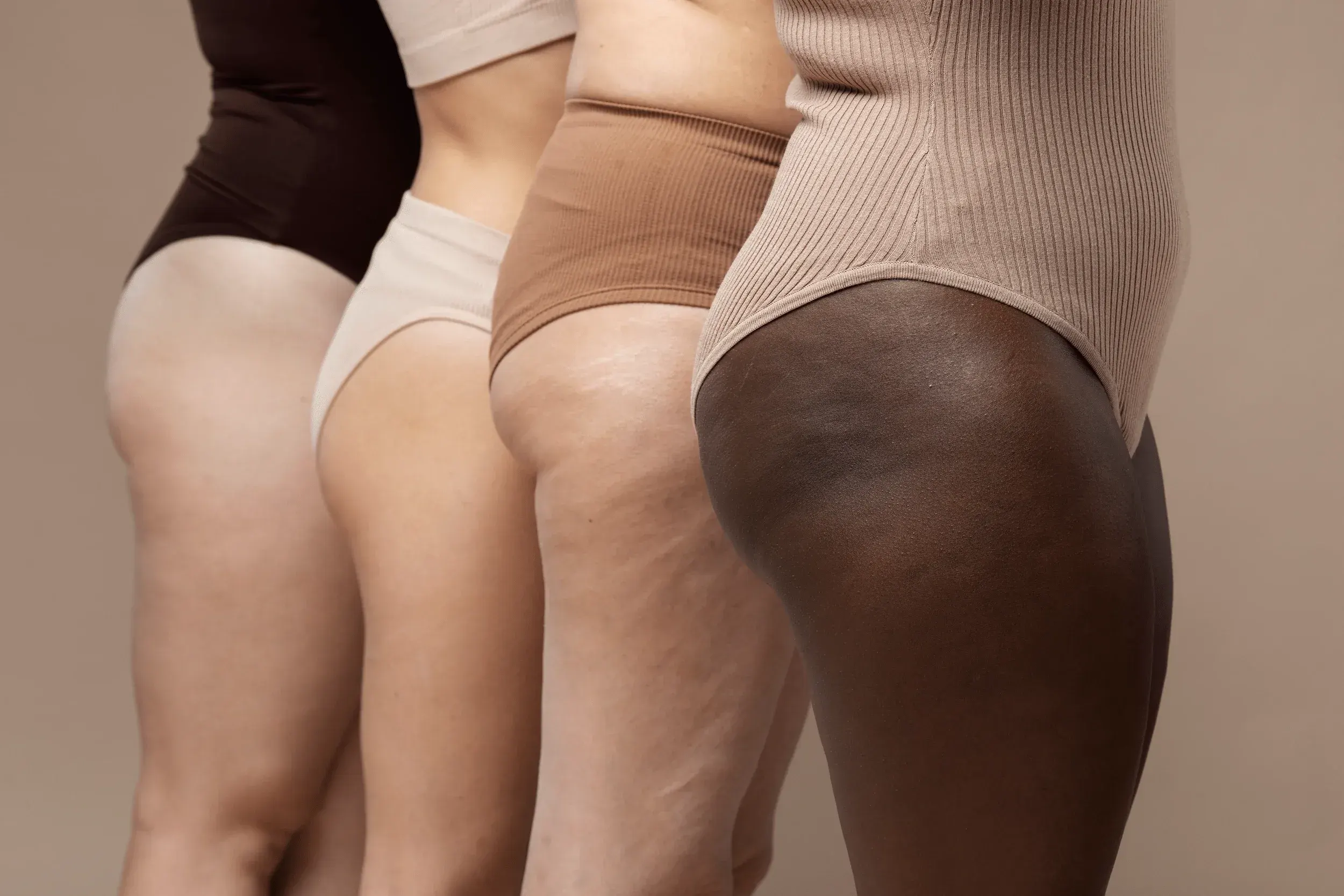


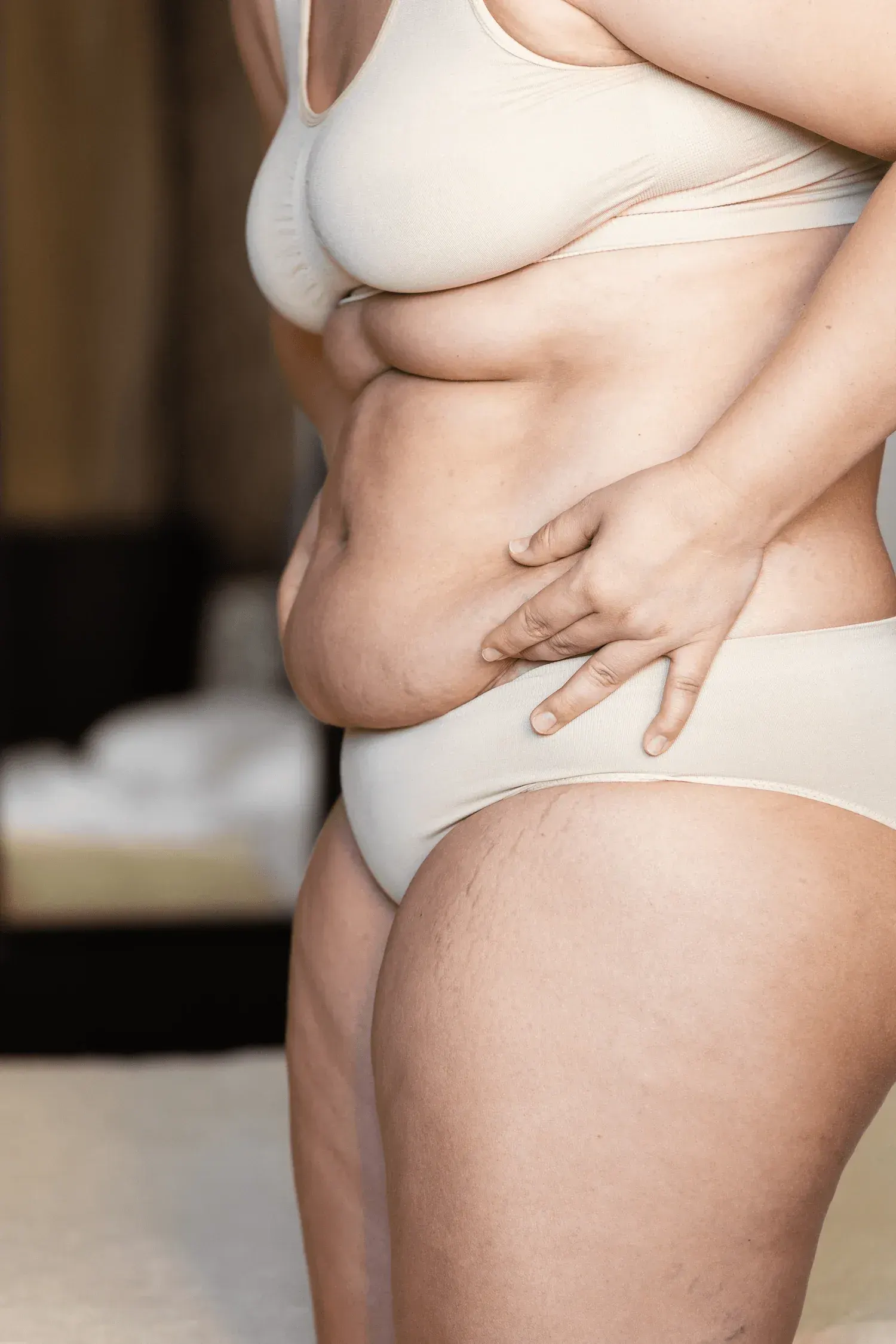
The foundation of smooth skin lies in the structural arrangement of subcutaneous connective tissue. In healthy tissue, fibrous septae-the vertical bands connecting the dermis to deeper fascia-distribute tension evenly across fat chambers. These perpendicular connective tissue bands create compartments that hold fat cells in organized layers beneath the skin surface.
When these fibrous septae become rigid or contract, they pull downward on the skin while subcutaneous fat pushes upward, creating the characteristic dimpling pattern. Research demonstrates that women possess more perpendicular fibrous septae compared to men's crosshatch pattern, explaining why cellulite affects 80-90% of post-pubertal women but remains rare in men despite similar fat distribution.
This structural difference combines with hormonal influences on fat deposition patterns and connective tissue integrity. Estrogen affects adipocyte distribution and fibrous tissue strength, while decreased skin thickness with aging-approximately 6% reduction per decade after age 30-makes the underlying dimpling pattern more visible through the dermis.