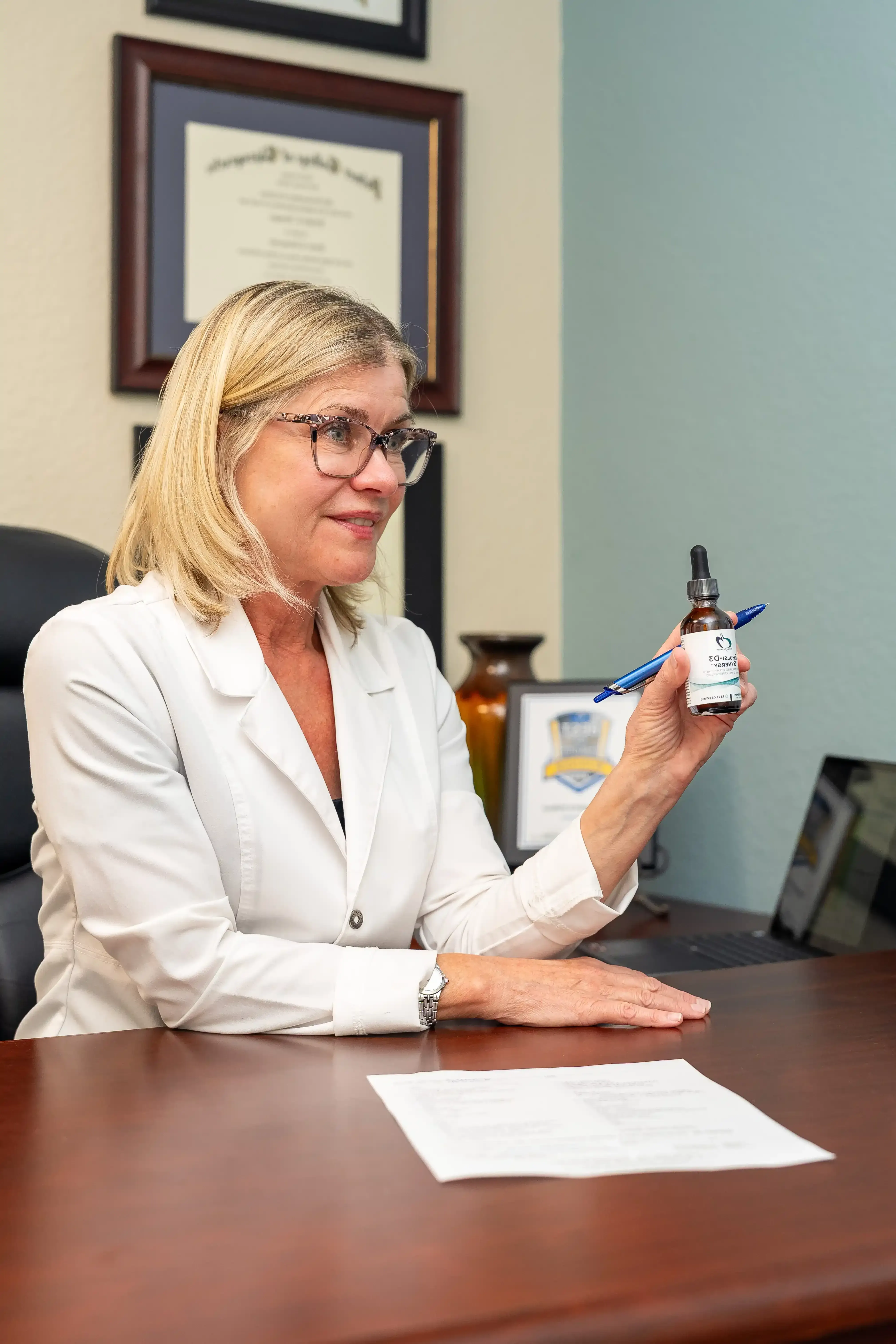



Patient discussing OCD treatment options at Arise Integrative Wellness Port Charlotte

OCD Treatment in Port Charlotte, FL

Reclaim Control Over Your Thoughts

Common In:Adults 18-65
Primary Causes:Genetics, Brain Circuits, Stress
Treatment Time:20-40 minutes per session
Results:4-6 weeks of treatment
Understanding obsessive compulsive disorder at Arise Integrative Wellness Port Charlotte

What Is Obsessive Compulsive Disorder?

Medically reviewed by Dr. Laura Korman, DC, DACBN and Dr. Kauffman, DC

Obsessive compulsive disorder is a chronic neuropsychiatric condition characterized by persistent, intrusive thoughts (obsessions) that trigger intense anxiety and repetitive behaviors or mental acts (compulsions) performed to alleviate that distress. This condition involves dysfunction in specific brain circuits responsible for filtering thoughts and regulating behavioral responses.

When you experience unwanted thoughts that seem impossible to control-thoughts about contamination, safety, order, or harm-and feel compelled to engage in rituals like excessive handwashing, checking, counting, or arranging to reduce the anxiety these thoughts create, you may be experiencing OCD. These patterns often begin subtly but gradually consume increasing amounts of time and mental energy.

Many individuals with OCD describe feeling trapped in a cycle they recognize as irrational yet feel powerless to stop. The condition can affect work performance, relationships, and daily functioning, with some patients spending several hours each day managing obsessions and performing compulsive rituals to maintain a sense of control.

Illustration of brain circuitry involved in OCD at Arise Integrative Wellness Port Charlotte

Why OCD Happens

Understanding the Root Causes

Research has established that OCD stems from dysfunction within the cortico-striato-thalamo-cortical (CSTC) circuit, a neural pathway connecting the prefrontal cortex, striatum, and thalamus. In healthy brain function, this circuit serves as a filtering system that helps determine which thoughts require action and which can be dismissed as irrelevant. When this circuit malfunctions, the brain struggles to suppress unwanted thoughts, leading to the intrusive obsessions characteristic of OCD.

Neuroimaging studies have consistently shown hyperactivity in the orbitofrontal cortex and anterior cingulate cortex in individuals with OCD, regions responsible for error detection and emotional response. This overactivity creates an amplified sense of distress in response to intrusive thoughts, triggering the urgent need to perform compulsive behaviors to reduce the perceived threat or discomfort.

The condition affects two to three percent of the general population across cultures, with genetic factors contributing significantly to susceptibility. First-degree relatives of individuals with OCD carry four to five times the risk of developing the disorder themselves, suggesting strong hereditary components that interact with environmental stressors to trigger symptom onset.


Diagram showing neural pathway dysfunction in OCD at Arise Integrative Wellness

Brain Circuit Dysfunction in OCD

How Neural Pathways Affect Behavior

The CSTC circuit operates through two opposing pathways: a direct pathway that facilitates actions and an indirect pathway that inhibits them. In OCD, the direct pathway becomes hyperactive while the indirect pathway shows reduced function, creating an imbalance that makes it difficult to suppress unwanted thoughts or stop repetitive behaviors once they begin.

This neural imbalance explains why individuals with OCD often recognize their thoughts and behaviors as excessive or irrational yet feel unable to control them. The orbitofrontal cortex generates a persistent feeling that something is wrong or incomplete, while the anterior cingulate cortex amplifies the emotional distress associated with these feelings, creating a powerful drive to perform compulsive acts.

Serotonin dysregulation plays a crucial role in maintaining this circuit dysfunction. Reduced serotonin availability in specific brain regions contributes to impaired communication between the prefrontal cortex and subcortical structures, perpetuating the cycle of obsessions and compulsions. This neurochemical component explains why treatments targeting brain circuitry, such as TMS therapy with Exomind, can effectively modulate neural activity and reduce symptom severity.

Lifestyle and environmental factors affecting OCD at Arise Integrative Wellness Port Charlotte

What Accelerates OCD Symptoms?

Identifying Your Triggers

01

Genetic Predisposition

First-degree relatives carry four to five times the risk, with specific gene variants affecting serotonin transport and glutamate signaling contributing to susceptibility.

02

Chronic Stress

Prolonged stress elevates cortisol, disrupting the prefrontal cortex's ability to regulate emotional responses and exacerbating circuit dysfunction in vulnerable individuals.

03

Traumatic Experiences

Significant life events such as loss, abuse, or major transitions can trigger symptom onset or intensify existing OCD, particularly in those with genetic vulnerability.

04

Sleep Disruption

Poor sleep quality impairs the brain's ability to regulate mood and cognitive function, worsening obsessive thought patterns and reducing impulse control over compulsions.

05

Comorbid Conditions

Coexisting anxiety or depression amplifies OCD symptoms through shared neural pathways and compounded emotional distress.

Arise Integrative Wellness clinic interior in Port Charlotte Florida

Why Choose Arise Integrative Wellness

Expert Care in Port Charlotte

  • Comprehensive Assessment
  • FDA-Cleared Technology
  • Integrative Approach
  • Convenient Virtual Options

Treatment Options Comparison

Finding Your Best Approach

Treatment Best For Session Time Results Timeline Maintenance
TMS Therapy (Exomind) Moderate to severe OCD 20-40 minutes 4-6 weeks Periodic boosters
Telehealth Consultation Ongoing support & monitoring 30-60 minutes Varies by plan As needed
Nutrition Counseling Supporting brain health 45-60 minutes 4-8 weeks Monthly follow-ups
Person concerned about OCD symptoms at Arise Integrative Wellness

You May Be Experiencing OCD If...

Recognizing When to Seek Help

  • Intrusive Thoughts
  • Repetitive Rituals
  • Time Consumed
  • Avoidance Patterns
  • Doubt and Uncertainty
  • Need for Reassurance

Frequently Asked Questions

About OCD Treatment

01 What is TMS therapy and how does it help with OCD?

TMS therapy uses magnetic pulses to stimulate specific brain regions involved in OCD, including the medial prefrontal cortex and anterior cingulate cortex. By modulating activity in these circuits, TMS can reduce the intensity of obsessive thoughts and the compulsive urge to perform rituals, with clinical trials demonstrating a 38% response rate compared to 11% for sham treatment.

02 Is TMS therapy painful or uncomfortable?

Most patients describe TMS as a tapping sensation on the scalp during treatment. The procedure is non-invasive, requires no anesthesia, and allows you to remain fully awake and alert throughout each 20-40 minute session. Any mild scalp discomfort typically diminishes after the first few sessions as you become accustomed to the sensation.

03 How quickly will I see improvement in my OCD symptoms?

Many patients begin noticing improvements after four to six weeks of consistent treatment, with real-world data showing most individuals experiencing symptom reduction within 20 sessions. The timeline varies based on symptom severity and individual neurological response, with some patients reporting earlier changes in thought patterns and anxiety levels.

04 Can OCD be managed without medication?

TMS therapy offers an FDA-cleared, medication-free approach to OCD treatment in Port Charlotte. For individuals who have not responded adequately to medications or prefer non-pharmaceutical options, neuromodulation provides an alternative pathway to symptom relief by directly addressing the brain circuits underlying the condition.

05 What role does nutrition play in managing OCD?

Nutritional factors can influence neurotransmitter production and brain inflammation, which may affect OCD symptom severity. Nutrition counseling at Arise Integrative Wellness identifies dietary patterns that support optimal brain function, including adequate intake of omega-3 fatty acids, B vitamins, and amino acids critical for serotonin synthesis.

06 How does OCD differ from general anxiety?

While OCD and general anxiety share some features, OCD involves specific, intrusive thoughts (obsessions) and ritualized behaviors (compulsions) performed to neutralize those thoughts. General anxiety typically presents as pervasive worry without the compulsive behavioral component, though the conditions can coexist and share overlapping brain circuitry.

07 Can virtual consultations effectively support OCD treatment?

Research demonstrates that telehealth consultation for OCD achieves a 43.4% mean reduction in symptoms with a 62.9% response rate, comparable to in-person treatment outcomes. Virtual sessions work well for ongoing support, symptom monitoring, and therapy between in-office TMS treatments.

08 Is OCD a lifelong condition?

While OCD is typically a chronic condition, many individuals achieve significant symptom reduction or remission with appropriate treatment. The goal is not necessarily elimination of all symptoms but rather reducing their frequency and intensity to a level that no longer interferes with quality of life, relationships, and daily functioning.

Location16954 Toledo Blade Blvd
Port Charlotte, FL, 33954

Schedule Your Consultation

Scientific References

  1. PubMed (PMID: 31109199) - Multicenter randomized double-blind placebo-controlled trial demonstrating efficacy and safety of deep TMS over the medial prefrontal cortex and anterior cingulate cortex for OCD, with 38% response rate versus 11% for sham stimulation.
  2. PubMed (PMID: 33183769) - Real-world post-marketing data from 22 clinical sites confirming deep TMS efficacy for OCD, with most patients showing improvement within 20 treatment sessions.
  3. PubMed (PMID: 37343662) - Meta-analysis of transcranial magnetic stimulation in OCD demonstrating moderate therapeutic effect on symptom severity and three-fold increased likelihood of treatment response compared to sham conditions.
  4. PubMed (PMID: 35587365) - Retrospective longitudinal study showing video teletherapy achieved 43.4% mean reduction in OCD symptoms with a 62.9% response rate, comparable to in-person treatment outcomes.
  5. PubMed (PMID: 31985955) - Comprehensive review establishing OCD prevalence at two to three percent of the general population, with cortico-striato-thalamo-cortical circuit dysfunction as the core neurobiological mechanism.